Blog

Ethan Hawke Set for His Initial Oscar Victory with Overlooked 2025 Movie

When the year’s top performance premiered in theaters in October 2025, many were completely oblivious. Featuring a filmmaker who defines a generation, a transformative portrayal, and a star-studded supporting ensemble, the legacy of Richard Linklater’s “Blue Moon” is bound to significantly outlast its brief run at the box office, as both critics and audiences commend Ethan Hawke’s depiction of the troubled songwriter Lorenz Hart as the pinnacle of one of Hollywood’s most enchanting actors.

A heartrending character exploration of a man whose world, artistry, and relationships slip away from him, “Blue Moon” observes as Hart’s mask of witty remarks and self-importance crumbles under an onslaught of sorrow and envy when his long-time collaborator Richard Rodgers, portrayed by Andrew Scott, embarks on the most triumphant stretch in musical theater history with the debut of the legendary “Oklahoma!”. Predominantly occurring over a single night at the iconic New York venue Sardi’s, the film confines one of America’s profound artistic tragedies to a series of urgent dialogues between Hart and his fellow patrons, including a suave bartender (Bobby Cannavale), writers Oscar Hammerstein (Simon Delaney) and E.B. White (Patrick Kennedy), and protégé-turned-possible love interest Elizabeth Weiland (Margaret Qualley).

Hawke’s portrayal is a blend of humor and pathos, as the alcoholic Hart struggles to conceal his feelings of despair and jealousy with a barrage of crude humor, spirited soliloquies, heartfelt confessions, and half-formed writing proposals. Hawke’s performance stands out as one of the finest in his esteemed career. Complete with a combover and an seemingly impossible 12-inch height reduction, his metamorphosis into the elusive songwriter known for classics like “My Funny Valentine,” “Isn’t It Romantic?,” “My Heart Stood Still,” “Bewitched,” and the titular “Blue Moon” is one of the most captivating feats of cinematic artistry in 2025 and truly deserving of the award-season acclaim it seeks.

The imp inside Ethan Hawke

Premiering at the Berlin film festival to thunderous applause, “Blue Moon” showcases an exceptional performance a decade in the making, as the duo have been toying with fellow Richard Linklater collaborator Robert Kaplow’s script for around 12 years. The issue? Ethan Hawke was too much of a heartthrob to portray the small-statured, balding Hart. While audiences may lovingly roll their eyes at the heartthrob’s sarcastic musings about career opportunities lost to his graceful aging, the extended time spent immersing in Hart’s character is evident. By incorporating all the odd mannerisms and personality traits of the quirky writer, Hawke transports Hart straight from the pages of Broadway history, bringing the famously larger-than-life character vividly to life in a mesmerizing interplay of comedic timing and existential dread. What makes this transformation even more intriguing is the stark contrast between Hart and Hawke’s public persona. As Hawke himself articulates in an interview with co-star Andrew Scott on Sony Pictures Classics’ YouTube channel, every actor possesses an “imp” or “a profoundly different character that resides within us, and this one is mine.”

Observing Hawke in “Blue Moon” evokes the sensation of holding an amber-encased fossil to candlelight; audiences revel in the glow of encountering a relic from the past wholly encapsulated within its small, Bourbon-hued prism. As Hart oscillates between incisive theater critiques to earnest pleas for love, friendship, and just one more drink, the façade shatters under the pressure of a world he barely recognizes. However, rather than an instance of existential disintegration, the film balances cynicism with a hefty dose of sharp dialogue and philosophical musings, turning what might feel like a slow-motion disaster into an emotional monster truck rally with your favorite foul-mouthed uncle.

Is it time?

“Blue Moon” arrives at a compelling juncture for both its lead and director. Ethan Hawke, whose career is brimming with captivating roles, is experiencing a mini-renaissance with entries in his “Black Phone” horror series and the television thriller “The Lowdown.” For Richard Linklater, this is his second 2025 film exploring an eccentric artist at a career crossroads, with his first, Netflix’s “Nouvelle Vague,” highlighting director Jean-Luc Godard’s seminal 1960 French New Wave classic, “Breathless.” In both instances, Linklater captures a momentous snapshot in art history, one portraying a legendary artist on the verge of greatness, and the other having plummeted from the heights.

Yet, the duo are far from the film’s only highlights. Andrew Scott as Hart’s reserved and thoughtful former collaborator, Richard Rodgers,

Read More
Comparison between Google Photos and iCloud: Identifying the Better Choice for iPhone Users

**Google Photos Vs. iCloud: Which Is Superior On iPhone?**

My iPhone stores a multitude of photos, including vacation pictures, screenshots I promised myself to delete later, and cherished family moments I aim to keep forever. This prompted me to spend the last week assessing which cloud backup solution is best suited for my needs. Apple automatically provides access to iCloud Photos upon setup, seamlessly integrated into every iPhone, iPad, and Mac. Conversely, Google Photos has remained popular among numerous users due to its intelligent editing features, robust search capabilities, and accessibility across nearly all devices.

For iPhone users, choosing between these two services can be complex. iCloud operates almost in the background, quietly syncing your photos while maintaining everything neatly arranged within the Photos app. On the other hand, Google Photos highlights cross-platform accessibility, user-friendly sharing, and innovative AI functionalities that assist in recalling past memories or swiftly locating a particular image.

Both services have evolved over time, yet they adopt distinctly different methods concerning storage limits, pricing, sharing capabilities, and overall ease of use. Whether your goal is to achieve the most integrated experience on iOS or you place a higher value on portability across various device platforms, your decision will influence how effortlessly you can manage, browse, and secure your photos.

**Google Photos vs. iCloud: Storage, Pricing, and Adaptability**

When selecting a photo backup service for your iPhone, aspects such as storage and pricing are frequently critical factors, marking the divergence between the two platforms. iCloud provides each Apple user with 5GB of complimentary storage, which can be quickly consumed once photos, videos, messages, and device backups all draw from the same storage reservoir. To synchronize your library across devices, most iPhone users will have to opt for iCloud+, which includes tiers such as 50GB, 200GB, and 2TB, with even greater options available through Apple One packages.

In contrast, Google Photos begins with 15GB of free storage for users, yet that allowance is shared with Gmail and Google Drive. Nevertheless, it offers three times the free storage compared to Apple, giving casual users additional leeway. Enrolling in a Google One plan, commencing at 100GB for $2.00/month, provides extra storage options, covering everything from economical beginner tiers to larger family-oriented plans that allow sharing with up to five individuals.

Adaptability is another significant distinction. iCloud operates most efficiently when you’re entirely immersed in Apple devices, while Google Photos caters to anyone utilizing a variety of hardware. Whether you’re alternating among iPhone, Android, ChromeOS, Windows, or a web browser, Google Photos ensures a steady experience nearly anywhere.

For iPhone users who remain firmly within Apple’s ecosystem, iCloud might still seem more intuitive. However, if you wish for your library to seamlessly transition across devices or desire the most free storage from the outset, Google Photos presents an enticing alternative.

**User Experience and Daily Functionality on iPhone**

Regarding everyday usability, iCloud and Google Photos employ vastly different strategies, with this divergence becoming clear the instant you access your camera roll. iCloud, integrated directly into Photos, offers a very native experience on the iPhone. Your images sync automatically in the background without needing an additional app, your edits sync across devices, and your iPhone manages full-resolution downloads based on your storage preferences. For many users, it just works effortlessly, aligning with Apple’s intent.

In contrast, Google Photos introduces an extra layer to your process, which many photographers I know find genuinely beneficial. The standalone app crafts a more curated experience reminiscent of Flickr, exposing old memories, automatically organizing images, and providing intelligent album suggestions, edits, and duplication management. Its search functions are exceptionally powerful, often simplifying the retrieval of obscure images by identifying objects, locations, or even text recognized within the picture.

The primary distinction lies in the level of control. iCloud operates unobtrusively in the background and seldom requires your attention. Google Photos, however, is more interactive, equipping you with tools, reminders, and features that inspire you to take a more active role in managing your library.

If you favor a solution that’s unobtrusive and smooth, iCloud integrates seamlessly into iOS. If you prefer an application that aids in rediscovering photos, organizing your library, or utilizing advanced editing features, Google Photos may appear more engaging on an iPhone.

Read More
6 Lesser-Known Mac Configurations to Boost Productivity Immediately

Apple’s Mac products have established the benchmark for productivity and efficiency over the years, as these computers achieve the ideal harmony between software and hardware capabilities. Particularly concerning software, macOS provides a thoughtfully designed, easy-to-use experience that enhances productivity through its feature-rich yet simplistic interface. The default applications offer powerful functionality through the Apple ecosystem that creates a connection between your Mac and other devices, including the iPhone and iPad, making it easy to manage tasks and notifications universally. Nevertheless, this is merely the surface of the entire Mac experience, and even experienced users might not be aware of its full potential beyond the obvious.

Whether you’re a longtime user or new to Macs, there are multiple less-known native settings in macOS. You can streamline repetitive workflows using a collection of pre-made actions or boost your multitasking capabilities by grouping several applications to prevent clutter. Consequently, this list explores six lesser-known Mac settings that you should consider for an immediate productivity boost.

Hot Corners

<div class="columns

Read More
Indie App Highlight: ‘Vector’ – An Intelligent and Resourceful Spotlight Substitute for Mac

### Indie App Spotlight: Vector – A Robust Alternative to Spotlight

Welcome to the Indie App Spotlight, a weekly series where we showcase the newest innovations in the indie app scene. This week, our attention is on **Vector**, a powerful application crafted to improve your Mac experience by offering a fast and effective substitute for Spotlight.

#### Key Features of Vector

Vector emphasizes speed, privacy, and smooth integration, allowing users to swiftly locate what they are searching for. In contrast to Spotlight, which frequently encounters accuracy issues, Vector assures that when you input an app name and press enter, you will get the precise result you desire.

Here are some of the prominent features that render Vector a compelling option:

– **Semantic Search for Messages and Files**: Utilizing an on-device model tailored for Apple Silicon, Vector harnesses the Neural Engine to provide precise search outcomes for messages and files. You can search using keywords or broad phrases, simplifying the process of finding pertinent texts and documents.

– **Clipboard Manager**: Effortlessly keep track of your copied items.

– **Emoji Picker**: Quickly access and embed emojis into your messages and documents.

– **Weather and Calendar Widgets**: Stay updated on approaching meetings and weather conditions at a glance.

– **Wikipedia Search**: Conveniently access information from Wikipedia without leaving the app.

– **Maps Integration**: Retrieve directions and location data directly from your search outcomes.

Additionally, Vector incorporates a calculator and currency conversion feature, all reachable from a handy search bar positioned in the bottom right corner of your Mac, which can be adjusted as necessary.

#### Getting Vector

Vector is available for all Apple Silicon Macs operating on macOS Tahoe. You can acquire it on

Read More
Anticipating the 2026 Motorola Razr Ultra: Improvements Inspired by the Galaxy Z Flip 7 and Present Smartphone Trends

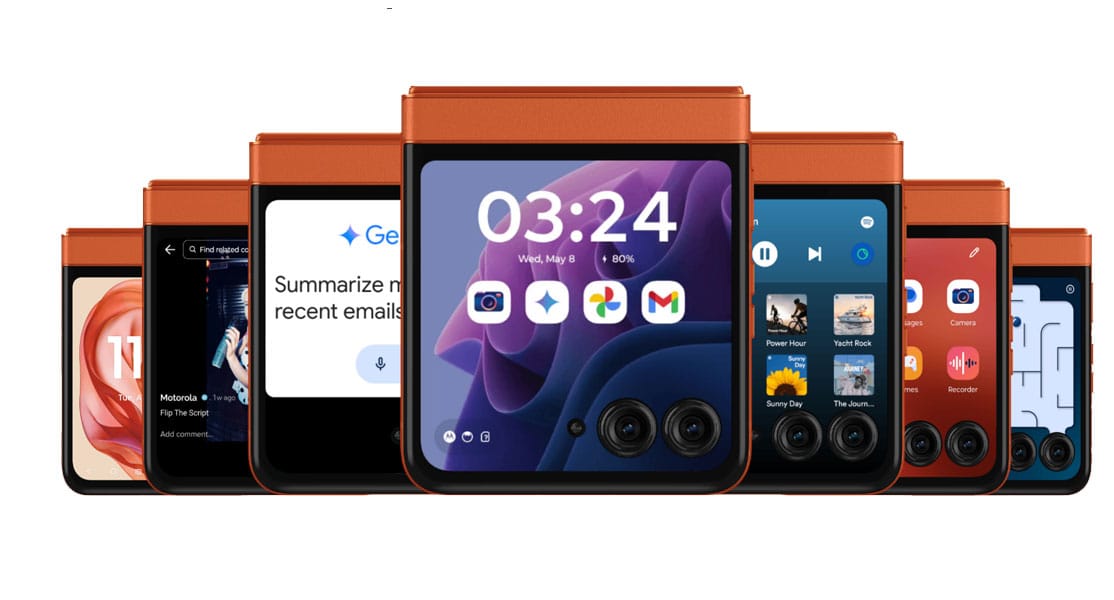
Here are some modifications I would really like to observe in the Razr Ultra 2026.

When the Motorola Razr Plus 2023 was unveiled, it was the first occasion in quite some time that I felt genuinely thrilled about a new smartphone. Of course, it wasn’t the inaugural Razr smartphone, and the Galaxy Z Flip was already firmly established by that time, but it was evident that Motorola had something special.

Fast forward two years, and Motorola appears to have a successful strategy with the Razr. The brand has heavily relied on the flip phone as its premier flagship, with the Razr Ultra 2025 showcasing specifications that compete with even the Galaxy S25 Ultra. However, as 2025 nears its conclusion, my curiosity is growing about what Motorola might reveal for its 2026 model and how the trends of this year could influence the next Razr device.

So, what should we anticipate from the Motorola Razr 2026? Here’s what I would like to see and what I believe we will likely receive.

The one positive aspect of ultra-thin smartphones

Whether you appreciate them or not, slim phones were incredibly popular in 2025. Devices like the Samsung Galaxy S25 Edge and iPhone Air demonstrated what manufacturers can achieve when they focus on design, attaining remarkably slim profiles under 6mm. To me, this is the ideal technological progression for flip phones, which, even with their compact builds, can be quite bulky when folded.

While these phones do exhibit some significant downsides, such as smaller batteries and fewer cameras than typical flagship models, certain manufacturers have somewhat addressed these issues when releasing their slim variants. Motorola recently introduced the Edge 70, which measures less than 6mm thick while boasting a considerably larger 4,800mAh battery than those found in Samsung and Apple’s devices.

Sure, it lacks a telephoto camera and employs a mid-range Snapdragon 7-series chipset, but I would prefer a battery that lasts all day over a telephoto lens.

The Razr Ultra 2025 is fairly thick, measuring 7.29mm and 15.69mm when unfolded. However, I see the Edge 70 as an excellent precursor for a more slender Razr Ultra 2026. Samsung previously executed something similar with the even thinner Galaxy Z Flip 7, which measures 6.5mm unfolded (13.7mm when folded), following the launch of the S25 Edge.

I would love to see Motorola incorporate a substantial silicon-carbon battery while reducing the phone’s thickness to 6.5mm or less.

New colors and finishes

One aspect I particularly appreciate about the Razr series (and Motorola devices in general) is their use of alternative materials and captivating color choices. The Razr Ultra 2025 introduced vegan leather, wood, and Alcantara with Pantone colors such as Cabaret, Scarab, and Mountain Trail. This presents a striking alternative to the hard glass backs that are commonplace on most Android phones, making Motorola’s devices distinctive.

Pantone has recently announced Cloud Dancer as the color of the year for 2026, and Motorola has already rolled out the Edge 70 featuring this hue, with a “leather-inspired back finished in a quilted pattern” and embedded Swarovski crystals.

I am confident that the upcoming Razr will incorporate this color, but I hope the company extends its partnership with Swarovski to the Razr 2026 Ultra (it was only present on the base Razr 2025).

We’ve also seen leaks of what seems to be the Motorola Edge 70 Ultra, which displays a different textured back finish compared to the Razr series. From what I can see, Motorola might be utilizing a silicone polymer material that is quite gripping and resembles a Peak Design fabric case.

Motorola should integrate this material into the next Razr series as an additional alternative to its usual vegan leather colors. Hopefully, Motorola will also bring back its wood and Alcantara selections.

A Razr for all users

Motorola revamped its lineup this year by unveiling three Razr models instead of two, offering consumers greater choices and aligning with established strategies from companies like Samsung, Google, and Apple. However, Motorola’s pricing for the Razr series seemed somewhat misaligned.

I truly admire the Razr Ultra 2025, but $1,300 appears to be excessive for a Motorola phone, making it challenging to recommend. Fortunately, we witnessed a few promotions during Prime Day and Black Friday that made it considerably more accessible, but the Razr Ultra 2026 should not exceed $1,100.

I would love to see the Razr Ultra 2026 start at $999, though $1,100 would be in line with Samsung’s recent pricing for the Galaxy Z Flip 7. If that involves reducing the base storage from 512GB to 256GB, I believe that’s a compromise most users would accept.

Read More
The Significance of Selecting the Appropriate USB Port on Your Computer

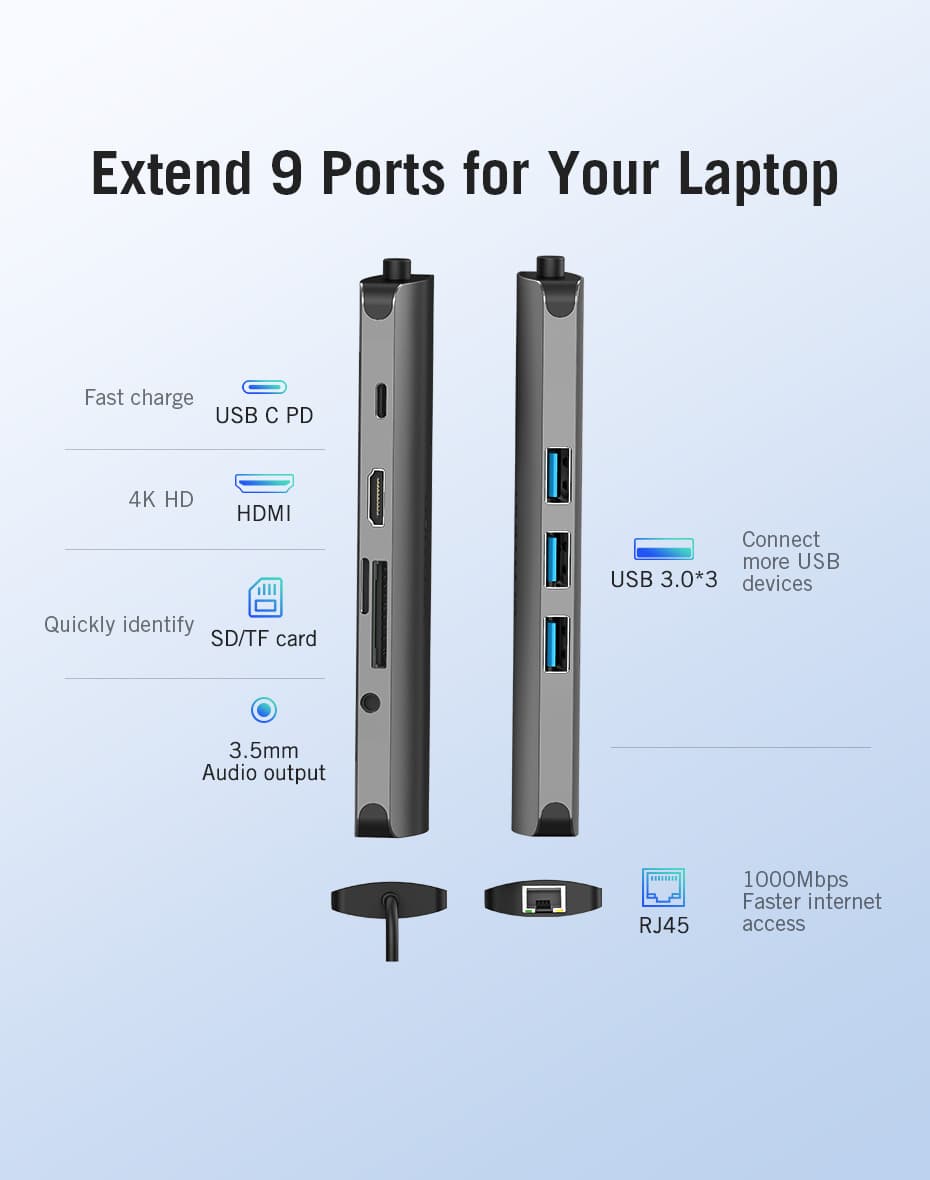
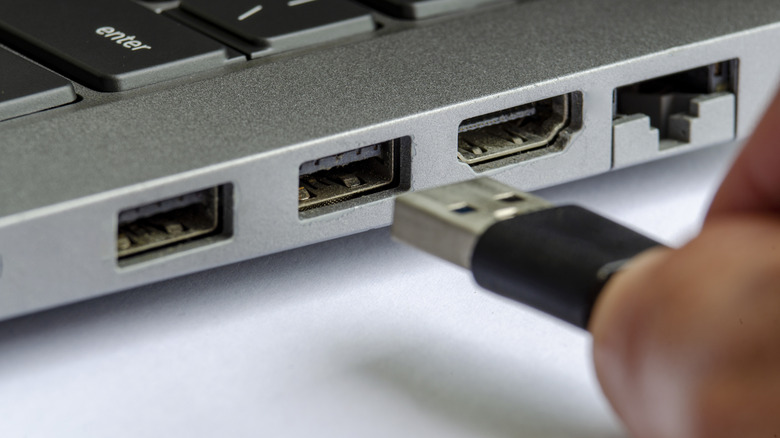
When you prepare to connect an external hard drive or USB flash drive to your preferred device, a decision awaits you. This is because most computers feature several USB ports, and even though they adhere to the same standards, they aren’t all identical. You can attach a USB-A device to any Type-A port, but whether the outcomes differ is another matter. Is it important which USB port you choose? Technically, no. However, in some cases, yes.

The most frequently used USB ports nowadays comprise USB Type-A, typically found on computers and laptops, along with USB Type-C, which appears on smartphones and portable devices. Other types like USB-B, USB Mini, and USB Micro are less commonly encountered in consumer-grade computers. This discussion will emphasize USB Type-A ports.

Contemporary computers generally provide various USB-A ports of different specifications. Depending on their manufacturing date, they may range from older versions like USB 2.0 to more recent ones like USB 3.1. They offer universal compatibility, yet connecting a modern device to an older port might significantly influence your experience. For instance, file transfers are considerably slower over a USB 2.0 connection, especially if the connected device is engineered for the quicker, modern USB speeds. Therefore, while the specific port may not be crucial for performing the task, since every USB Type-A port will operate adequately with USB Type-A connectors, utilizing an outdated port could impede communication and prolong file transfers significantly.

The significant distinction between USB Type-A ports on your device

Four Techniques to Avoid OLED Screen Burn-In

OLED displays operate differently than conventional LCD or LED screens: Each pixel on an OLED display generates its own light, removing the requirement for a separate backlight. This enhances contrast and results in deeper blacks. Since individual pixels can be controlled autonomously, they can be completely turned off to produce true blacks, a characteristic many consumers cite as the primary motivation for switching to OLED.

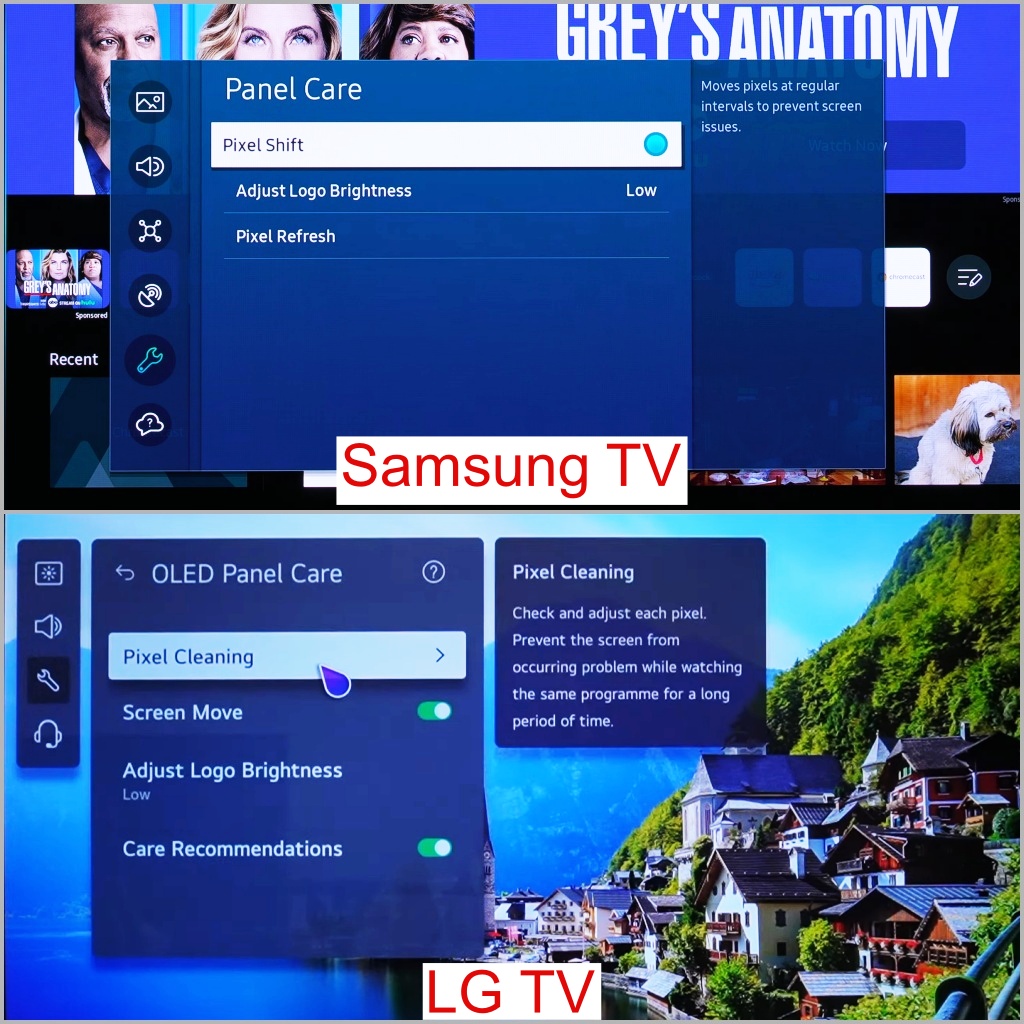
However, this technology has a significant downside. These screens utilize carbon-based materials that deteriorate over time. When a cluster of pixels ages faster than others, it can result in a faint, ghostly image overlaying what should be visible on the display. Progress is being made to eradicate OLED burn-in, but for now, you can make modifications to possibly slow the decline.

Modify your TV configurations

Five Notable US Space Missions Carried Out Beyond NASA

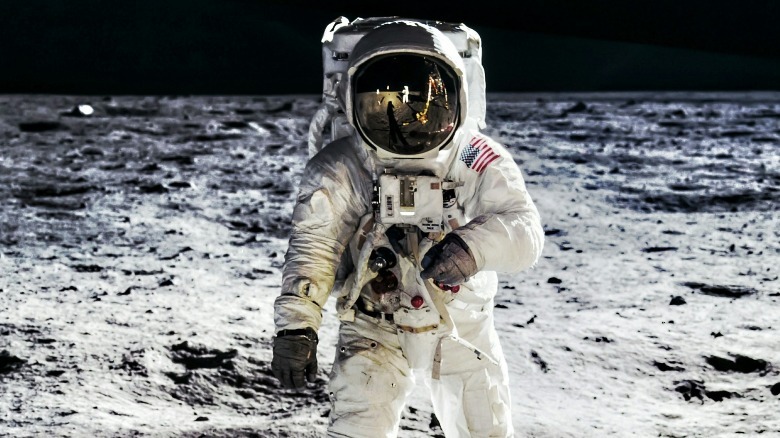
government-supported NASA space explorations to the moon and further likely spring to mind. However, underneath those well-known images exists a different narrative, where U.S. space initiatives operate completely independently of NASA. We refer to covert military experiments such as the X-37B Orbital Test Vehicle, the commercial arrays of Earth-observing CubeSats, suborbital adventure experiences, and even demonstrations of asteroid mining technology. These daring endeavors are reaching orbit and beyond under their own flags.

These missions do not depend on NASA’s support. They are autonomous initiatives that utilize innovative technologies, cater to emerging markets, and redefine what “traveling to space” entails. As the expanse of space extends beyond government dominance, it’s essential to highlight some remarkable U.S. missions. These groundbreaking missions successfully navigated around the renowned space agency altogether. By doing this, they foreshadowed the forthcoming era of space: managed by private firms, military advancements, and infrastructure systems, rather than the traditional astronaut-agency framework.

X-37B Orbital Test Vehicle – U.S. Space Force (2010 – present)

The X-37B Orbital Test Vehicle of the U.S. Space Force stands as one of the most sophisticated space planes ever launched by the U.S. This test unit and its missions operate completely outside NASA’s jurisdiction. Crafted by Boeing, the X-37B took its inaugural flight in 2010 as a reusable spaceplane with no crew onboard. The vehicle represents a hybrid between a satellite and a spacecraft. It can remain in Earth’s orbit for extended periods before needing to return. The missions assigned to the X-37B are generally classified, so detailed information about its operations remains limited. Nonetheless, each mission marks progress toward realizing reusable space technology.

The most recent mission, designated

Read More
The Up-and-Coming Music Platform Taking on Spotify and Apple Music

the numerous rival music streaming platforms — represent the most prevalent way individuals enjoy music. Indeed, according to a Forbes article from the previous year, close to 85% of the music industry’s earnings are derived from streaming services. This is unsurprising, as a subscription to one of these platforms effectively provides you with access to virtually any track you might wish to hear in an instant. However, the challenge for certain users lies intrinsically in the idea of streaming — specifically, that you do not truly possess the music you are experiencing. This absence of a tangible interaction, or a feeling of permanence, is prompting some audiences to revert to a more technologically basic type of media: the vinyl record. Vinyl enthusiasts highlight the distinctions in sound related to the format itself as a draw to the medium, too.

The emphasis on the term “some audiences” is important here, as while vinyl listenership has indeed increased over the past decade or so, it has not overtaken streaming in popularity. Refer to this thorough analysis from Statista. It pointed out that despite vinyl “constituting 8% of U.S. music revenue,” it remains far from the significant heights it reached in the late ’70s. The reality remains that the trend of listening to vinyl is experiencing growth — and that 8% revenue statistic is certainly noteworthy. So what drives individuals back to those sizable, grooved discs?

How vinyl differs from other types of recorded music